As you enter Los Tacos Azules, the unmistakeable smell of masa cooked over a comal gives you a warm welcome that feels like a hug. For a moment, even in the middle of Japan it feels like being back home.
The restaurant, founded by Mexican chef Marco Garcia from Monterrey, is located in Sangenjaya, a quieter residential neighborhood southwest of central Tokyo. Instead of trying to recreate Mexico literally, the space exists somewhere in between, blending traditional techniques with Japanese seasonality and precision.
Beef tongue, carnitas and green mole tacos, tlacoyos with cactus and shirasu. Some dishes and salsas stay close to the traditional, others drift completely into local context, but the constant is the blue corn that’s grown in Japan and then processed daily in house. As García notes “Japanese cooks are interested in learning about Mexican ancient techniques directly from a chef’s who’s perfected the technique, and they treat is with the same respect they would give to their own traditions”.
What makes the place memorable is not authenticity in the strict sense, but the intention and care. Each dish is assembled with the kind of detail more commonly associated with sushi counters than taquerías. Even the atmosphere avoids cliché. The space is calm, minimal, and more aligned with Tokyo’s quiet precision than the loud visual language often attached to Mexican restaurants abroad.
And of course, it works.
Los Tacos Azules doesn’t feel like Mexican food translated for Japan. It feels like Mexican food evolving in Japan and taken to the next step.
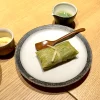
I had the pleasure of visiting the space myself during a trip to Tokyo, where I tried one of the most memorable things I ate in the city: a matcha tamal stuffed with azuki beans. That dish I think explains the concept in every single bite.
It felt like the perfect example of Mexican food redefined, shaped by the places it travels to without losing its essence. It serves as a reminder (if we ever need one) of how adaptable, creative, and expansive Mexican cuisine can be when it’s allowed to evolve rather than being doomed to simply replicate itself abroad.
I also had the chance to meet chef Marco Garcia during that visit, and shared a little bit of tequila Cascahuín infused with ume, a small moment that captured the entire spirit of the restaurant in a sip: Mexico and Japan, meeting somewhere in between through corn, agave, hospitality and care.
Find them in one of their 2 locations: Ebisu and Setagaya


Mexican Abroad:
A collection of Mexican food spots I find during my travels outside of Mexico, places that use Mexican ingredients, techniques, and traditions but reshape them through the culture and flavors of their new home. A lot of curiosity, a lot of food research, and lots of amazing surprises.